
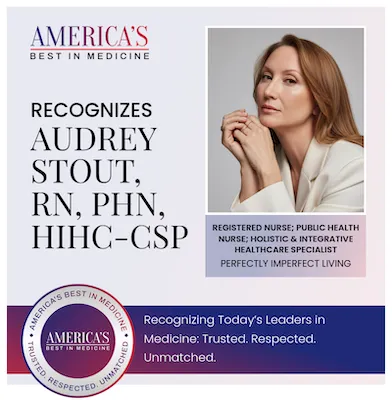
America's Best in Medicine 2025
A Nursing Milestone I Didn’t Expect: Being Nominated for America’s Best in Medicine 2025
Some news doesn’t hit you all at once.
When I learned I’d been nominated for America’s Best in Medicine 2025, I didn’t immediately feel fireworks. I felt… quiet. Like my nervous system needed time to catch up to the meaning of it. I read the words, I stared at them, I walked away, I came back. And then, slowly, it started to sink in.
Not because I’ve been waiting for recognition—most nurses aren’t. We’re trained to keep moving, to handle what’s in front of us, to be steady in the middle of other people’s emergencies. We learn to be competent and composed even when we’re running on fumes. We don’t typically expect praise. We expect responsibility.
But when recognition does come—when someone pauses long enough to say, “I see what you do”—it lands in a different place. It feels rewarding, not because it inflates ego, but because it acknowledges impact. And impact is what nurses quietly carry every day.
Why this matters to me (and why it took time to feel it)
If you’ve followed my work for any length of time, you know I don’t separate the professional from the personal. Not because boundaries aren’t important—they are. But because healing is deeply human, and healthcare is at its best when it honors the whole person.
I started nursing to get to where I am now. And that sentence holds more than it looks like on the surface.
Because “where I am now” isn’t just a job title or a credential. It’s an evolution.
It’s the lived understanding of what it means to fight for your health when the system is overwhelmed. It’s the humility of being the patient and the professional. It’s the decision to practice in a way that respects both science and suffering, both evidence and experience.
My path has been anything but linear. It has been layered, challenging, and at times—painfully clarifying. And it’s exactly why this nomination matters to me: not as a trophy, but as a marker.
A marker that the kind of care I believe in—integrative, compassionate, evidence-informed, and deeply human—is being seen.
Nurses don’t get recognized enough, and it matters more than people realize
Here’s what most people don’t understand unless they’ve lived it:
Nursing is not only what we do. It becomes how we think.
Nurses are trained to assess, to anticipate, to problem-solve, to translate complex medical realities into human language. We advocate, we educate, we coordinate, we de-escalate. We see patterns. We notice what others miss. We are often the bridge between a patient’s lived experience and the clinical plan on paper.
And yet, nursing is also one of the professions most likely to be taken for granted—because when a nurse does their job well, things don’t fall apart. The crisis gets prevented. The patient feels safe. The family understands. The system keeps moving.
That invisible impact is real impact.
So yes—recognition matters. Not because nurses need applause to do the work, but because appreciation protects the profession. It reminds nurses they’re not disposable. It reminds healthcare systems that empathy and excellence are not optional extras—they’re foundational.
What this nomination represents in my work today
This nomination feels especially significant because of the intersection I stand in now:
Registered Nurse. Public Health Nurse. Holistic & Integrative Healthcare Specialist.
I care about medicine that works. I care about research. I care about standards, safety, and ethics. I also care about the parts of health that don’t show up neatly in lab values: chronic stress, nervous system dysregulation, trauma stored in the body, inflammation influenced by lifestyle, isolation, grief, identity shifts, and the slow erosion that can happen when pain becomes a daily companion.
My work is rooted in bridging gaps:
• Between clinical care and lifestyle medicine
• Between symptom management and root-cause exploration
• Between “you’re fine” and “I know I’m not fine”
• Between the medical system and the human experience inside it
This nomination is not just about me. To me, it’s recognition of a kind of leadership that isn’t always loud.
It’s the kind of leadership that looks like:
• Listening longer than is convenient
• Educating without shaming
• Advocating even when it’s uncomfortable
• Staying curious instead of dismissive
• Supporting people in rebuilding trust in their bodies
And it’s also recognition of the fact that integrative care belongs in the conversation—especially for the people who feel like they’ve tried everything and are still suffering.
The deeper emotional truth: I didn’t become this practitioner by accident
There’s a version of my story I don’t always lead with, but it’s always there in the background: I know what it’s like to fight for relief. I know what it’s like to navigate chronic pain, setbacks, and the mental and emotional weight that comes with long-term healing.
There’s a particular kind of resilience that gets forged when your body becomes your teacher.
When you’re forced to slow down. When your old identity doesn’t fit anymore. When you realize how thin the line is between functioning and falling apart. When you learn firsthand what so many patients endure quietly: being strong because you don’t have another option.
That lived experience changed how I practice. It made me more patient. More specific. More compassionate. And frankly, less tolerant of care that gaslights, minimizes, or rushes people through the system like a checklist.
So when I say this nomination took time to sink in—it’s because I’m not just receiving recognition as a professional. I’m receiving it as a woman who has rebuilt herself more than once. As a nurse who has walked through both sides of healthcare. As a practitioner who chose to turn pain into purpose and purpose into service.
What I hope this recognition does next
If I’m honest, the best part of this nomination isn’t the title or the badge. It’s what it can open.
More visibility means more reach. More reach means more people finding support sooner—before they feel hopeless, before they decide “this is just how it is,” before they accept a life that’s smaller than what’s possible.
I want this recognition to be a doorway, not a destination.
A doorway for:
• People living with chronic pain who are searching for a broader, more empowering approach
• Nurses and healthcare professionals who feel called to practice more holistically
• Anyone who wants evidence-informed lifestyle change without the gimmicks
• Individuals who need help building sustainable habits that reduce inflammation, improve function, and strengthen resilience
Because healing isn’t a trend. It’s a relationship—with your body, your mind, your choices, your support system, and your life.
And it’s built one aligned step at a time.
A note of gratitude (and a quiet promise)
To those who nominated me: thank you. You saw something worth acknowledging, and you took the time to name it. That matters.
To the clients, patients, and communities I’ve served: thank you for trusting me with your stories and your care. You’ve shaped my practice as much as any credential ever could.
And to my fellow nurses: I see you. I know what you carry. I know how much you do that never makes it into a headline. You deserve recognition—not just for how hard you work, but for how deeply you impact lives.
This nomination is a moment I will honor—not by holding it up as proof, but by continuing to do what I’ve always done:
Show up with integrity. Practice with skill and compassion. Stay rooted in evidence and humanity. And keep building a model of care that helps people feel empowered in their healing.
If you’re reading this and you’re in a season where you feel unseen—keep going. Your work matters. Your healing matters. Your presence matters.
And sometimes, the moment of recognition arrives quietly… and changes something anyway
